



kit de sello de aceite hidráulico
Product Spotlight: Water Quenching System – Advanced solution for precision water quenching, supporting steel, metallurgy, petrochem, and more. 1. Industry Overview & Trend Analysis The water quenching process represents a cornerstone in modern thermal treatment technology, widely adopted in metallurgical, petrochemical, and advanced manufacturing sectors. According to a 2023 market report by Global Market Insights, the global water quenching systems market surpassed USD 2.1 billion, with annually projected growth of 6.3% through 2028. Rising demand for high-tensile, corrosion-resistant metals across automotive and energy verticals is expected to further enhance adoption. Key trends shaping the industry: Integration of smart sensors, PLC automation, and Industry 4.0 control . Development of energy-saving water quenching devices with reduced water consumption and heat recovery systems. Stringent adoption of international quality standards ( ISO 9001:2015 , ANSI/ASME norms). Customization for new steel alloys, high-speed wire rods, and demanding petrochemical component lines. 2. Parameter Comparison: Traditional vs. Water Quenching Process Solutions Parameter Oil Quenching Air Quenching Water Quenching Process Cooling Rate Medium (40-80°C/s) Low (~10°C/s) High (200-600°C/s) Typical Application Tool steel, springs Thin-section parts Structural bars, wire, plates Energy Efficiency Medium High Very High (with closed-loop systems) Uniformity Prone to distortion Variable Excellent (±2°C uniformity) Eco-Friendliness Risk of fire, oil contamination Clean Water-recyclable, no harmful vapor Safety Fire risk Low hazard Safe—no combustibles Compliance Moderate High Meets ISO, ANSI standards 3. Technical Specifications: Water Quenching System Fig 1: Main technical indicators comparison – Water Quenching System Specification Water Quenching System Industry Range Material 304/316 Stainless Steel, Cast Alloy Alloy steel, stainless, copper Operating Pressure 0.2 — 0.7 MPa 0.1 — 0.75 MPa Temperature Control ±2°C Precision ±5°C (typical) Cooling Rate 200—600°C/s 100—650°C/s Spray Nozzle Venturi/Mist type (ANSI B16.5 certified) Standard jet/spray Automation PLC + HMI + Remote I/O Manual/PLC Corrosion Resistance High (Salt-spray >1200h) Medium Service Life > 12 years 8-10 years Standard Compliance ISO 9001:2015, ANSI/ASME OEM 4. Water Quenching Process: Manufacturing Flow & Workflow Diagram Standard Water Quenching Process Workflow: ① Pre-heating/Annealing → ② Rapid Transfer (≤3s) → ③ Water Spraying/Immersion (controlled temp: 30-60°C, pressure: 0.4 MPa) → ④ Agitation & Monitoring (flow, pressure, temp sensors) → ⑤ Hold/Cooling Ramp-down → ⑥ Draining & Surface Treatment → ⑦ Quality Inspection (hardness, microstructure, ISO/ANSI checks) Legend: ■ Key node | ▶ Sensor checkpoint | ● Water flow step Visual explanation: (Watch Quenching Animation Video) 5. Design & Manufacturing Quality Materials: All process-facing components constructed from 304/316 Stainless Steel , certified per EN/DIN/ANSI for anti-corrosion and thermal durability. Manufacturing: CNC-machined spray chambers, precision-cast connectors, and robot-welded pipework ensure low tolerances (<0.12mm), minimal scale buildup, and high reliability. Inspection/Testing: Each water quenching device undergoes hydrostatic ( ISO 3452-1 ), ultrasonic weld, and full-cycle fatigue testing before shipment. Certification: Factory is certified to ISO 9001:2015 . Exports meet FDA water handling specs and full RoHS compliance for environmental protection. Service Life: Over 12 years (verified by third-party salt spray and life-cycle laboratory tests). Technical Indicator Comparison: Quenching System Types Fig 2: Comparative performance of Water, Air, and Oil Quenching Devices 6. Application Scenarios & Industry Cases Example 1 – Metallurgy: In a leading rebar mill (annual output 1.2 million t), the Water Quenching System enables online controlled cooling (QST process) and achieves yield strength increase from 400 MPa to 630 MPa. Example 2 – Petrochemical: For refinery heat exchanger tubing, rapid quenching ensures martensitic structures with less than 0.5% residual austenite, reducing subsequent stress-relief needs by 30%. Example 3 – Municipal Water: In cast iron pipe manufacturing, customized water quenching devices reduce cycle time by 22% and extend pipe service life. Proven energy savings: Up to 30% water reduction via closed-loop recycling modules. Corrosion resistance: Over 1200h in salt spray according to ASTM B117 . Safety: Automated interlocks and real-time leak detection pass OSHA/EU safety standards. Large partner portfolio: BAOSTEEL, POSCO, major EPC firms (>1700 installations worldwide since 2008). Field Data: Within 2 years, product defect rates drop from 2% to <0.3% in client facilities using this quenching solution. Learn More About Water Quenching System 7. Manufacturer Comparison: Customization & Support Feature Water Quenching System (Beijing YWLX) Domestic Brand A European Brand B Material Options 304/316L, Nickel Alloy 304/316 316L, Duplex Steel Smart Control PLC+SCADA+Remote app PLC only PLC+Custom Interface Delivery Lead Time 30–45 working days 60 days 45–65 days Warranty 18 months, onsite service 12 months, offsite 24 months, remote only Custom Engineering Free 3D Design & Flow Analysis Extra fee Included Standard Certs ISO, ANSI, API, RoHS ISO only ISO, EU EN Support Languages EN/CN/ES/RU English/Chinese English/German 8. Customization Process & Turnkey Project Workflow Requirement Analysis: In-depth technical meeting, site survey, water analysis, production line assessment. Design Phase: 3D CAD modeling, flow simulation (CFD), selection of valve/spray head per project standard. Approval: Submission of drawings, technical specs, and ISO/ANSI/FDA compliance documentation. Manufacturing & FAT: Component fabrication, pre-assembly, Factory Acceptance Test (FAT) with client. Delivery & Installation: 30–45 working days typical delivery. Onsite commissioning by certified engineers. Training & Handover: Operator and maintenance training, full documentation, performance verification. Service & Aftercare: 24/7 expert hotline, remote diagnostics, annual checkups included in warranty. 9. Real-World Performance & Data Visualization Fig 3: Application Shares of Water Quenching Process by Industry (2023 Data Source: Frost & Sullivan) Metallurgy: 54% Petrochemical: 22% Municipal Water: 18% Others (Energy, Marine, etc): 6% 10. Service Pledge, Delivery, and Quality Commitment Lead Time Guarantee: Standard delivery 30–45 working days, expedited option available. Warranty: 18 months, full parts and labor, with global on-site service. Support: Technical team available 24×7×365. Secure customer portal allows real-time ticket tracking and process documentation downloads. Customization Promise: Tailored water quenching device for special alloys, high-tensile steel, large-diameter tubes, and harsh environments. Quality: Each system is tested to ISO 9001:2015, ANSI, and FDA water handling standards. FAQs: Professional Insights on Water Quenching Process Q1: What are the most common materials for a water quenching device ? A: 304 and 316 Stainless Steel, due to their corrosion resistance and mechanical strength at high temperatures. For extreme environments—Nickel alloys or Duplex stainless can be used. Q2: What specifications are critical when sourcing a system? A: Focus on operating pressure (0.2–0.7MPa) , cooling rate (200–600°C/s) , temperature control accuracy (±2°C) , compliance certifications (ISO/ANSI/FDA), and automatic control features (PLC or CNC integration). Q3: Do installations need to meet specific industry standards ? A: Yes, installations typically comply with ISO 9001, ANSI B16.5 (for pipe/flange connections), ASME Boiler & Pressure Vessel Code, and often regional standards (e.g., OSHA, EN13445 for EU projects). Q4: How is product lifetime ensured? A: Service life >12 years is achieved via 316L steel, anti-corrosion coatings, periodic ultrasonic inspection, and salt-spray testing (ASTM B117) pre-shipment. Q5: What is included in the quality testing process for a quenching system? A: Full-cycle hydrostatic pressure test, leak detection, dimensional verification, hardness and microstructure checks post-quenching, and third-party ISO/EN certification review. Q6: What kind of automation is delivered? A: Advanced PLC+HMI automation, smart sensors for flow/pressure, remote web diagnostics, and full process data logging for batch traceability (IoT-enabled). Q7: What is the biggest advantage of customized water quenching process ? A: Allows for precise cooling rate adaptation per alloy/size, improved final mechanical properties, energy saving (via optimized nozzles and water recycling), and compliance with strict QA/QC protocols. 11. Further Reading & Authoritative References “Water Quenching in Metallurgical Application” Materials Science Journal, IOP Publishing, 2022 Frost & Sullivan, “Global Quenching System Markets, 2023,” Market Insights ASM International, Heat Treating Progress: Quenching Tech Forum Discussion: “Advantages of Water Quenching for High-strength Steels,” Eng-Tips Metallurgy Forum

We have successfully executed over 500
projects around the world,
many first-of-their-kind
research projects and products in China, including
We have successfully executed over 500
projects around the world,
many first-of-their-kind
research projects and products in China, including
-
2004
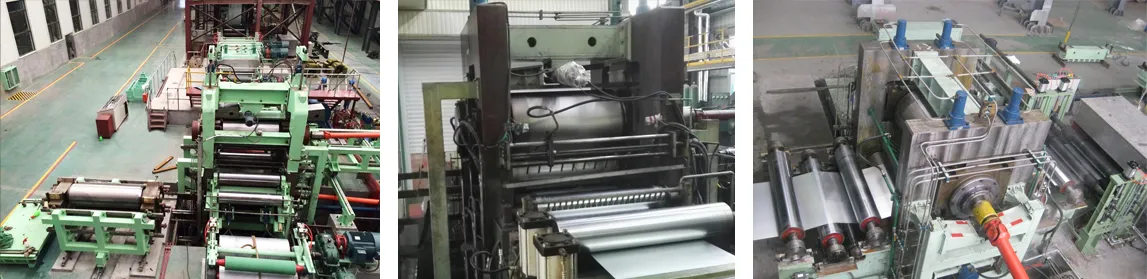
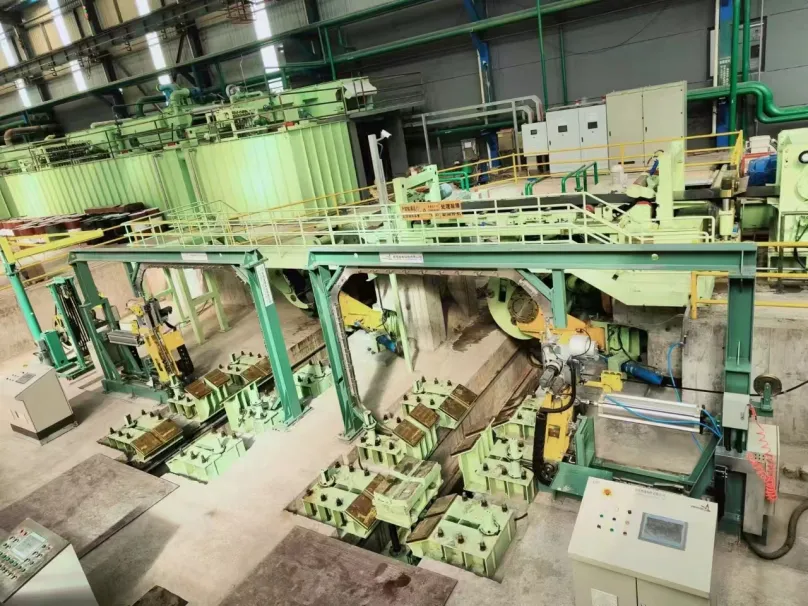
The 1st hydraulic AGC system for hot rolling of ribbon steel
-
2006
The 1st AFC system used for 1450mm skin pass mill
-
2009
The 1st 5-stand tandem line with 2-stand POR & Uncoiler for 650mm ribbon steel
-
2012
The 1st reversing mill for 1380mm strip
-
2016
The 1st soft-rolling system used in skin pass mill
-
2019
The 1st fully automated medium-width tandem cold rolling mill
-
2021
The 1st 5000KN Twin-stand double skin pass mill
-
2022
The 1st coupled pickling line & tandem cold mill with two modes - big roller & small roller
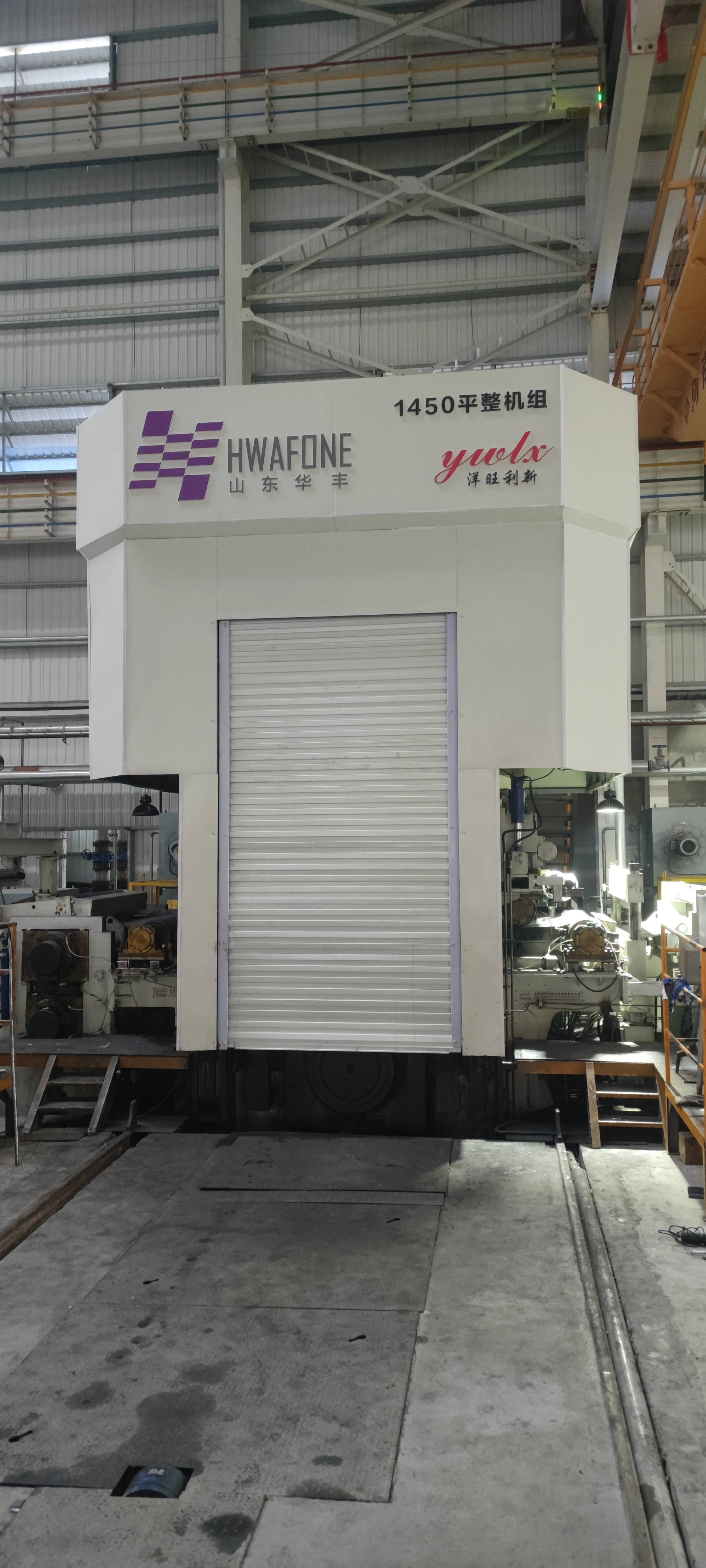
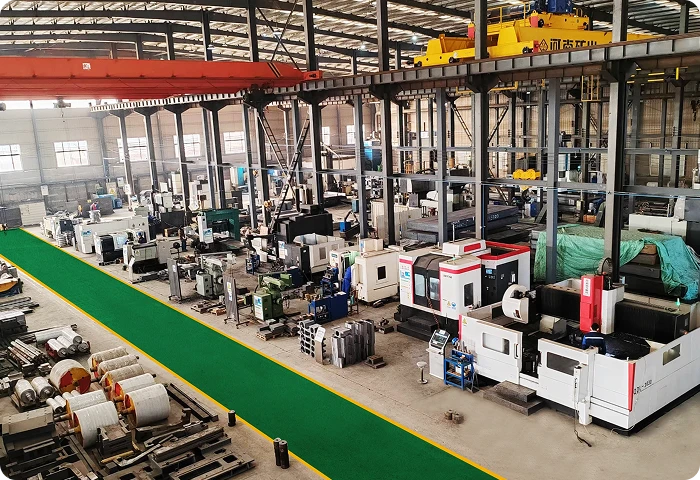
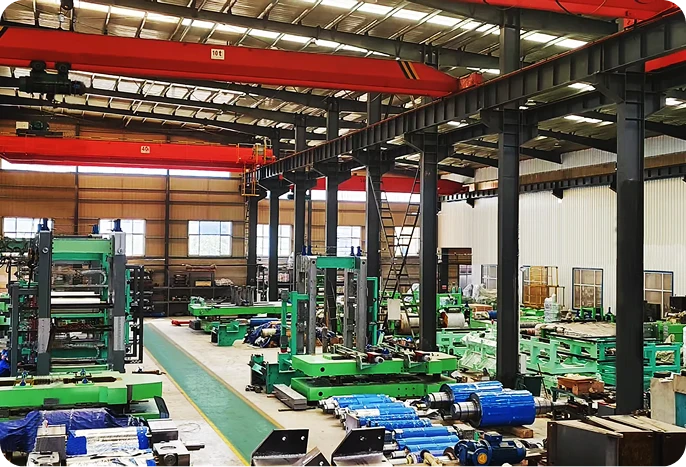
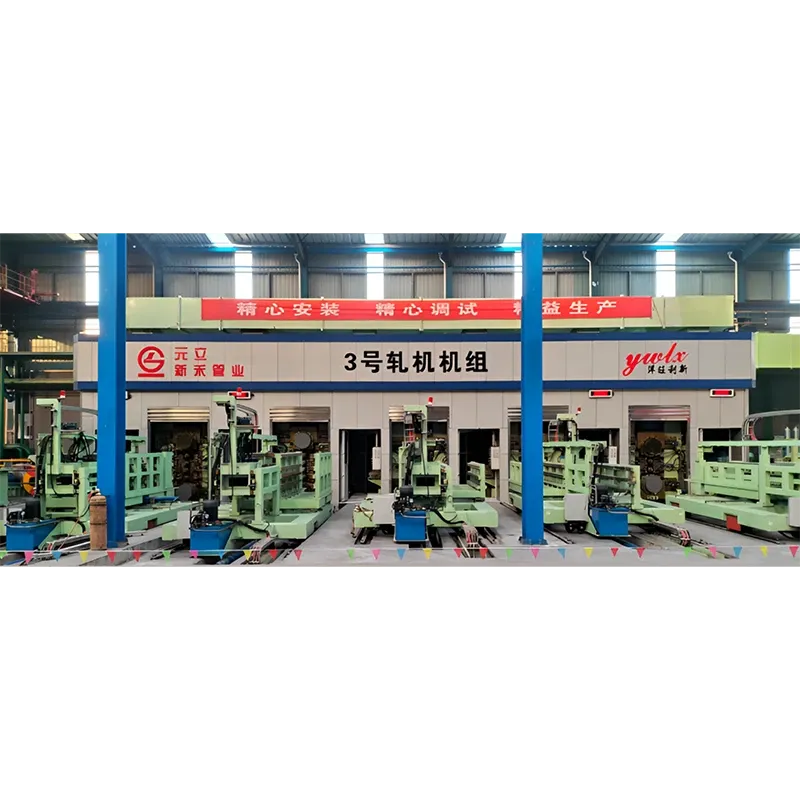
Yang Wang Li Xin operates a state-of-the-art facility over 66,000 square meters,and our manufacturing facility is fully equipped with high-tech machinery and high-capacity cranes. This enables us to handle large work pieces measuring 4.5m in width, 10m in length, and 1.5m in height, guaranteeing our capacity to produce 1800mm skin-pass mills and 1450mm rolling mills. The individual piece can weigh up to 100 tons.


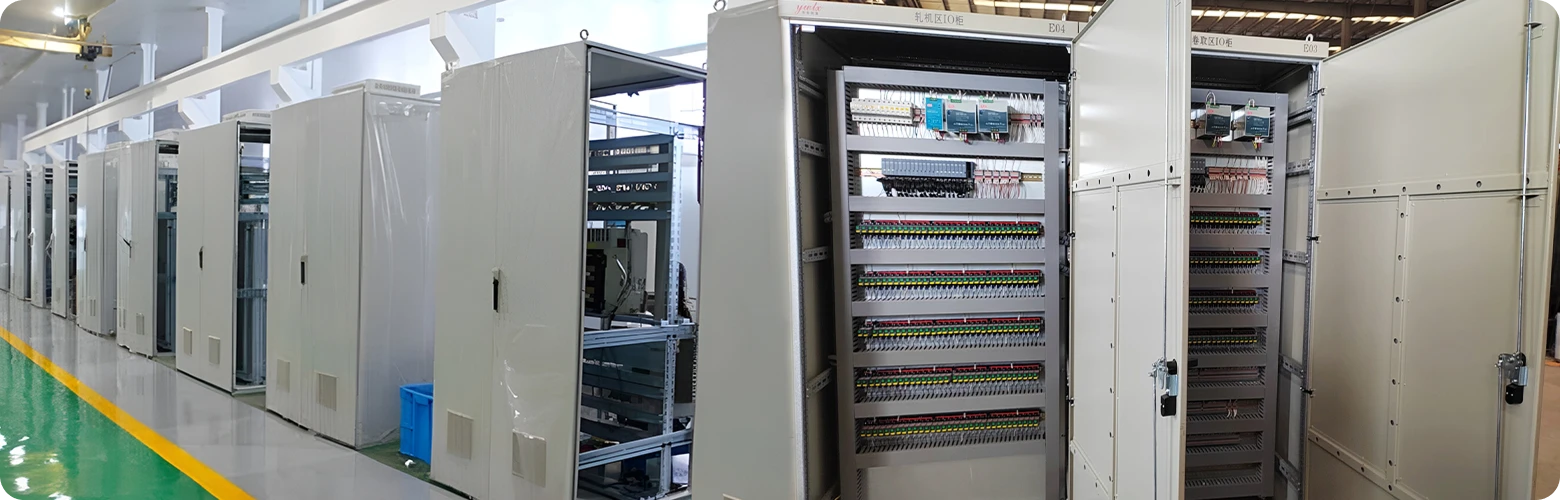
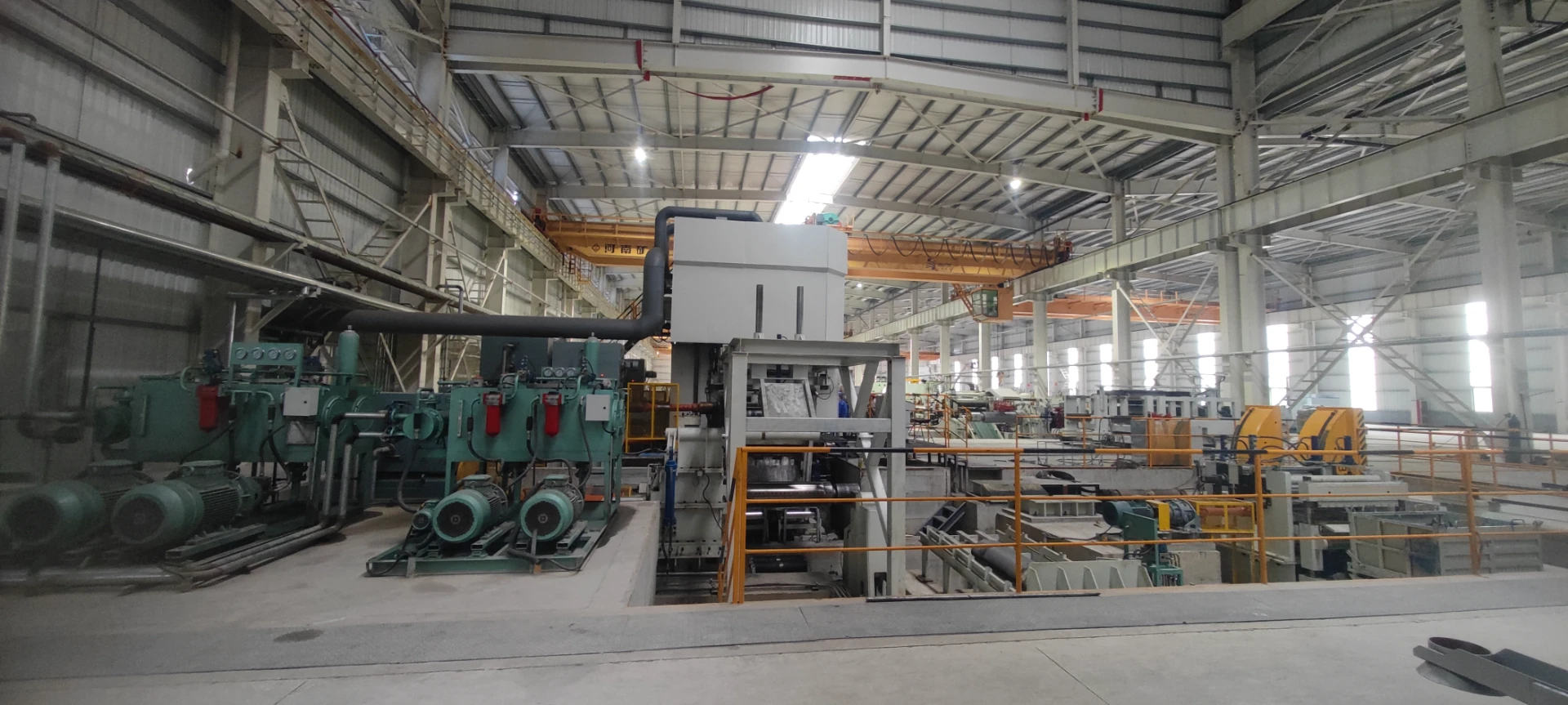
Quality is fundamental to the enterprise survival. We have established a comprehensive and meticulous quality management system and have successfully obtained ISO14000 certification. Starting from the design source, it supervises the entire production cycle, including design, procurement, processing, assembly, in-factory testing, installation, and online commissioning. The workshop is equipped with measuring tools like vernier calipers, spectrometers, hardness testers, and ultrasonic flaw detectors. They are used to check materials and control tolerances to ensure the final equipment meets or exceeds requirements. All products have a unique code, This enables the easy identification and traceability of the equipment components and ensures full control of quality.


-
 acciaierie ltdAcciaierie Ltd is a name synonymous with excellence in the steel manufacturing industry. Established with a vision to redefine the parameters of quality and innovation, Acciaierie Ltd has emerged as a beacon of expertise in the global steel market. Our array of high-quality steel products stands as a testament to our dedication to craftsmanship, ensuring each piece of steel meets the highest stand
 -
 Automated Packaging Machine: Fast, Efficient & Reliable SolutionsPowering Precision: Leading Chinese Manufacturers at Electronica China Driving Industrial Automation Introduction: The Pulse of Industrial Innovation at Electronica China Electronica China stands as a beacon for technological advancement, a pivotal event where the future of electronics unfolds. Far from being an event solely focused on microchips and circuit boards, it's a critical nexus for B2B d
 -
 مطاحن مخصصةWhen it comes to specialized grain mills, the importance of understanding their intricacies, advantages, and applications cannot be overstated. In an age where health consciousness and culinary creativity are at the forefront, finding the right milling equipment tailored to specific needs becomes essential. Grain mills, especially customized ones, offer unparalleled flexibility and control over th


